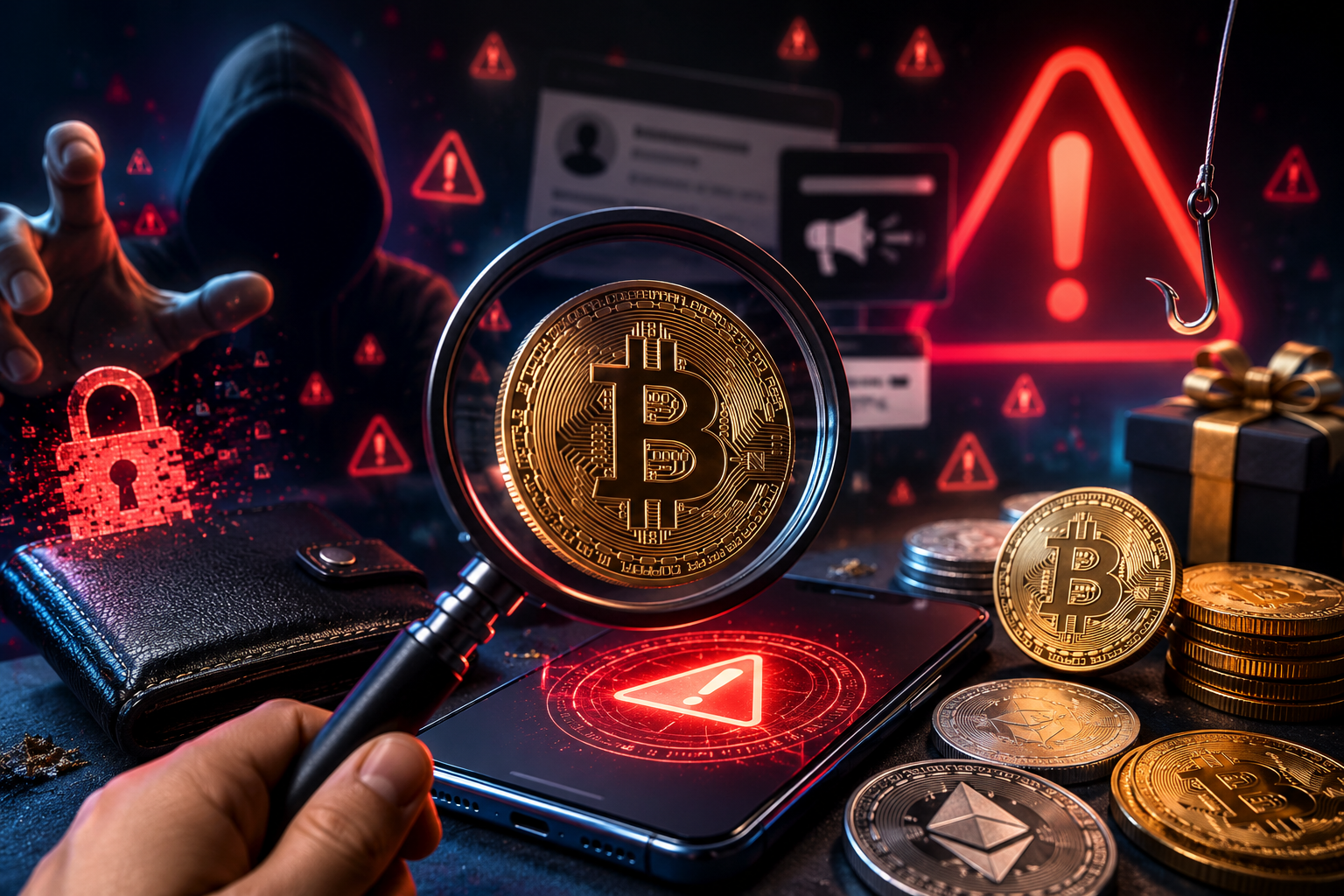

Here’s a scary number. Billions of dollars vanish to crypto scams every single year. And the worst part? The victims are rarely careless. They’re often smart, cautious people who simply didn’t recognize the warning signs until it was too late.
That’s the real problem in 2026. Scammers have gotten frighteningly good at looking normal, friendly, and trustworthy. They use polished websites, AI-cloned voices, fake celebrity endorsements, and slow-built relationships to lower your guard. The blockchain itself is rarely hacked. People are.
The good news? Almost every crypto scam waves the same red flags if you know what to look for. This guide breaks down 12 warning signs that the smartest investors learn to spot instantly. Learn these, and you’ll see scams coming from a mile away, long before they cost you a penny.
Why Spotting Scams Matters So Much in Crypto
Before the list, here’s why this skill is non-negotiable in crypto. Unlike a bank transfer or credit card charge, crypto transactions are irreversible. There’s no fraud department to call, no chargeback, no undo button. Once your coins are gone, they’re almost always gone for good.
Scammers know this. It’s exactly why they love steering victims toward crypto. The transactions are fast, final, and hard to trace. So your best and really only defense is prevention. Recognizing the red flags before you ever click a link or send a coin.
The encouraging news is that scams follow patterns. The same handful of tricks show up again and again. Memorize the signs below, and remember a simple rule: one red flag means pause, two or more means walk away. Let’s get into them.
The 12 Crypto Scam Red Flags to Watch For
- Promises of Guaranteed or Unrealistic Returns
This is the oldest and most reliable warning sign. If someone promises guaranteed profits, risk-free returns, or claims they’ll double your money, it’s almost certainly a scam. Crypto is volatile, and no legitimate investment can guarantee returns. The bigger and more certain the promise, the bigger the red flag.
- Pressure to Act Right Now
Scammers manufacture urgency on purpose. Countdown timers, “limited spots,” “prices double tomorrow,” or “only a few left” are all designed to crush your skepticism and stop you from thinking clearly. Legitimate opportunities don’t vanish if you take a day to research. Pressure to rush is a classic manipulation tactic.
- Requests for Your Seed Phrase or Private Keys
This one is absolute. No legitimate platform, wallet, or support team will EVER ask for your seed phrase, private keys, or password. Anyone who does is trying to steal everything you own. Treat any such request, no matter how official it looks, as an instant, guaranteed scam.
- Anonymous or Fake Teams
Real projects are transparent about who’s behind them. Scams often hide their team entirely, use fake names, or feature stock-photo “founders.” If you can’t verify who runs a project, or their credentials don’t check out, that’s a serious warning sign. Legitimate teams want you to know and trust them.
- Unsolicited Contact and “Friendly” Strangers
Be very wary of anyone who messages you first about an investment, especially on social media, dating apps, or messaging platforms. So-called “pig butchering” scams involve criminals building trust and friendship over weeks or months before slowly steering you toward a fake investment. If a new online friend pivots to crypto, be extremely cautious.
- Fake Exchanges, Apps, and Lookalike Websites
Scammers create convincing clones of real exchanges and wallets to steal your logins and funds. Always double-check the exact URL, watch for tiny misspellings, and only download apps from official sources. A site that looks almost right but isn’t is a major red flag.
- Celebrity or Influencer Impersonation
Fraudsters love faking endorsements from famous people and crypto influencers, increasingly using AI to clone faces and voices in videos. A “celebrity giveaway” asking you to send crypto first to receive more back is always a scam. Real giveaways never require you to send money.
- No Working Product, Just Hype
Many scams are all marketing and no substance. Endless buzzwords, vague “revolutionary technology” claims, and flashy promises, but no actual working product or clear explanation of how it works. If the hype vastly outweighs any real, verifiable product, be skeptical.
- Requests to Pay in Crypto for Odd Reasons
Treat any unexpected demand for payment in crypto as a default red flag. Scammers favor crypto because it’s fast and irreversible. Whether it’s a “tax” to unlock withdrawals, a “fee” to claim a prize, or a stranger insisting on crypto payment, unusual crypto payment requests deserve heavy suspicion.
- The Platform Won’t Let You Withdraw
A devastatingly common trap. Fake platforms often let you make small early withdrawals to build confidence, then suddenly freeze your account or demand “fees” and “taxes” before you can take out larger amounts. If withdrawing your own money suddenly requires more payments, you’re being scammed.
- Suspicious Tokens, Airdrops, and Links
Random tokens appearing in your wallet, surprise “airdrops,” or links promising free crypto are often traps. Connecting your wallet to a shady site or interacting with mystery tokens can trigger malicious approvals that drain your funds. Legitimate airdrops never require your seed phrase or an upfront payment.
- Fake “Recovery” and Support Services
After a scam, victims are often targeted again by “recovery services” that promise to get the lost money back for an upfront fee. These are almost always a second scam. Real authorities don’t charge upfront fees to recover funds, and no one can reverse a blockchain transaction.
Notice how many of these red flags target your wallet directly, especially the requests for seed phrases and the wallet-draining links. Understanding how wallets actually work makes these tricks far easier to spot. Our crypto wallets guide explains keys, seed phrases, and safe storage in plain English.
The Psychology Scammers Exploit
Here’s something worth understanding. Scammers aren’t just tricking your logic. They’re targeting your emotions. The two biggest levers they pull are fear and greed.
Greed makes you ignore warning signs when you’re dreaming about huge profits. Fear, especially the fear of missing out, makes you rush in before you’ve thought things through. Scammers deliberately stir up both, then add urgency so you act before your rational brain catches up.
This is exactly why staying emotionally level-headed is such a powerful defense. Understanding how fear and greed drive crypto behavior helps you recognize when you’re being manipulated. Our crypto Fear and Greed Index guide explains how these emotions move the market, and why a calm mindset protects you.
When you feel a strong emotional pull to act fast on a crypto opportunity, that feeling itself is a red flag. Real investing rewards patience, not panic.
How to Protect Yourself: Simple Habits That Work
Beyond spotting red flags, a few everyday habits dramatically lower your risk of ever falling for a scam.
Always do your own research: Verify projects independently. Check official channels, read the documentation, and confirm the team is real before trusting anyone.
Slow down: Scammers rely on speed. Giving yourself even 24 hours to think kills most scams, because the pressure was the whole trick.
Verify every link and address: Bookmark official sites, double-check URLs, and always send a tiny test transaction before moving large amounts.
Never share secrets: Your seed phrase, private keys, and passwords stay with you alone. No exception is ever legitimate.
Be skeptical of “too good to be true”: Because it almost always is. Guaranteed profits don’t exist in crypto.
It also helps to understand what realistic returns actually look like, so unrealistic promises stand out immediately. Comparing crypto to traditional assets gives you that benchmark. Our crypto vs stocks guide explains what reasonable long-term returns look like, making scam-level promises obvious by contrast.
What to Do If You Spot or Fall for a Scam
If you encounter a scam, the best move is simple: don’t engage, and don’t send anything. Block the contact and walk away. If something already feels off about a platform, stop adding funds immediately.
If you’ve already been scammed, act quickly but carefully. Stop all further payments, including any “recovery fee” requests, which are usually a second scam. Save all records, screenshots, addresses, and messages. Report it to the relevant authorities (more on trusted reporting channels below), and contact the exchange you used, since they may be able to flag the recipient address even though they can’t reverse the transaction.
Most importantly, don’t blame yourself. Modern scams are sophisticated and designed to fool even experienced people. The key is recognizing it and stopping the bleeding as fast as possible.
A Quick Note on “Hot” Coins and Hype
Some scams hide behind coins that look legitimate because they show a high market cap or lots of activity. But size alone doesn’t prove safety. Market cap can be inflated by hype, wash trading, or trapped liquidity rather than real value and genuine demand.
Learning to read the actual market data behind a coin, rather than trusting flashy claims, is a real defense. Our guide to reading crypto charts helps you understand price and volume so you can look past the hype and see what’s really going on.
Common Mistakes That Lead to Scams
Here are the classic mistakes that let scammers win. Knowing them keeps you sharp.
Mistake 1: Acting on Urgency. Rushing because of a countdown or pressure is how most victims get caught. Slow down, always.
Mistake 2: Trusting Unsolicited Messages. If someone contacts you first about an investment, treat it with deep suspicion.
Mistake 3: Sharing Sensitive Info. Handing over a seed phrase or password, even to “support,” is the fastest way to lose everything.
Mistake 4: Skipping Research. Investing without verifying the project, team, and platform leaves you wide open to fraud.
Mistake 5: Chasing Recovery Services. After a scam, paying upfront for “recovery” usually just means getting scammed twice.
Crypto Scam Myths
Let’s bust some common myths about crypto scams.
Myth 1: “Only careless people get scammed.” Wrong. Modern scams fool smart, cautious people every day. They’re designed to look completely normal and trustworthy.
Myth 2: “A big market cap means a coin is safe.” No. Market cap can be inflated by hype or fake activity. Size doesn’t prove legitimacy.
Myth 3: “If I get scammed, I can just reverse the transaction.” False. Crypto transactions are irreversible. This is exactly why prevention matters so much.
Myth 4: “Recovery services can get my money back.” Almost never. Most upfront-fee recovery services are themselves scams targeting victims a second time.
Myth 5: “Scams are easy to spot.” Not anymore. With AI-cloned voices and polished fake sites, today’s scams are sophisticated. Knowing the red flags is essential.
Putting It All Together: Your Scam-Spotting Checklist
Let’s wrap all 12 red flags into one quick mental checklist you can run anytime something feels off.
- Are returns guaranteed or unrealistic? Red flag.
- Is there pressure to act immediately? Red flag.
- Are they asking for your seed phrase or keys? Instant scam.
- Is the team anonymous or unverifiable? Be cautious.
- Did a stranger contact you first? Stay suspicious.
- Does the site, app, or endorsement look slightly off? Verify everything.
- Is it all hype with no real product, or are withdrawals blocked? Walk away.
Remember the golden rule: one red flag means pause and research. Two or more means walk away entirely. When in doubt, slow down.
Wrapping It Up
So now you know the 12 red flags that give away almost every crypto scam. Guaranteed returns, urgency, requests for your keys, anonymous teams, unsolicited friends, fake platforms, celebrity impersonation, empty hype, odd crypto payment demands, blocked withdrawals, suspicious airdrops, and fake recovery services.
The common thread is simple. Scammers exploit emotion and urgency, and they rely on crypto’s irreversibility. Your defense is awareness and patience. Recognize the signs, slow down, verify everything, and never share your secrets. One red flag means pause; two or more means walk away.
Crypto can be exciting and rewarding, but only if you protect yourself. The investors who stay safe aren’t the luckiest, they’re the ones who learned to spot the warning signs early. Now you’re one of them.
You now know how to spot crypto scams better than most investors out there. Keep these red flags in mind, trust your gut when something feels off, and stay safe out there.
Frequently Asked Questions
What are the biggest red flags of a crypto scam?
The biggest red flags include promises of guaranteed or unrealistic returns, pressure to act immediately, and any request for your seed phrase, private keys, or password. Other major warning signs are anonymous teams, unsolicited contact from strangers, fake or lookalike websites, and platforms that suddenly block withdrawals. One red flag means pause; two or more means walk away.
Will a legitimate platform ever ask for my seed phrase?
No, never. No legitimate exchange, wallet, or support team will ever ask for your seed phrase, private keys, or password through any channel. Anyone who requests these is trying to steal your funds. Treat any such request, no matter how official or urgent it appears, as an instant and guaranteed scam.
Why do scammers prefer crypto payments?
Scammers favor crypto because transactions are fast, final, and irreversible. Unlike a bank transfer or credit card charge, there’s no fraud department to call and no way to reverse a payment once it’s sent. This is why any unexpected or pressured request to pay in crypto should be treated as a default red flag.
Can I get my money back if I fall for a crypto scam?
Usually not, because crypto transactions are irreversible. However, you should still act quickly: stop all further payments, save all records and screenshots, report it to the relevant authorities, and contact the exchange you used, since they may flag the recipient address. Avoid ‘recovery services’ that charge upfront fees, as these are typically a second scam.
How can I protect myself from crypto scams?
Do your own research and verify projects independently. Slow down and never act on urgency, since pressure is a manipulation tactic. Double-check every URL and address, send a small test transaction before large transfers, and never share your seed phrase or keys. Be deeply skeptical of guaranteed returns and unsolicited messages. When something feels too good to be true, it almost always is.
Disclaimer
The content of this article is for informational purposes only. It is not financial, investment, or legal advice. Cryptocurrency prices are volatile and carry risk. Always do your own research and talk to a qualified expert before you make any investment choices. vCryptoCoin does not take responsibility for any losses that may occur from acting on the information in this article.
If you encounter or fall victim to a crypto scam, you can report it through the U.S. Federal Trade Commission at ReportFraud.ftc.gov, a tru