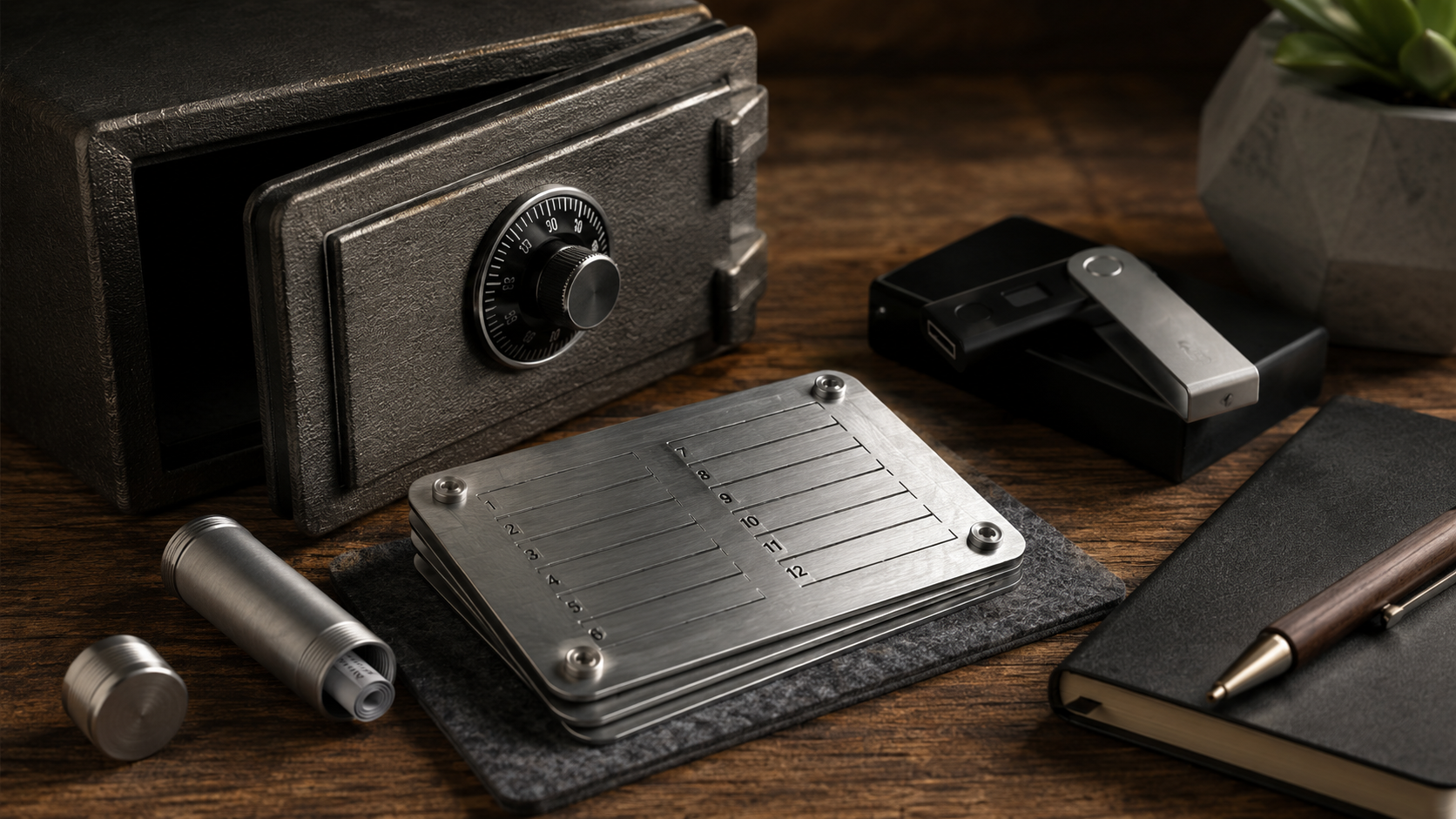

Suppose…you set up a shiny new crypto wallet. During setup, it hands you 12 random words and says, “Write these down and keep them safe.” You scribble them on a sticky note, slap it on your desk, and move on. A year later, your phone dies. And suddenly that flimsy sticky note is the only thing standing between you and your entire crypto stack.
That little list of words is your seed phrase, and it’s the single most important thing in self-custody crypto. Lose it, and your coins can be gone forever. Let someone else find it, and they can take everything. No password reset, no support line, no second chances.
This guide breaks down seed phrase security in plain English. What a seed phrase actually is, why it matters so much, how to store it safely, and the mistakes that cause people to lose everything. No jargon, no scare tactics. Just clear, practical steps to keep your crypto safe in 2026.
What Is a Seed Phrase, Really?
Let’s start with the basics. A seed phrase, also called a recovery phrase or mnemonic, is a list of simple words (usually 12 or 24) generated when you set up a self-custody wallet. It’s the master key to all the crypto in that wallet.
Here’s why it’s so powerful. Your seed phrase can regenerate your private keys and restore your entire wallet on any compatible device, anywhere in the world. If your phone breaks, your laptop dies, or your hardware wallet is lost, the seed phrase brings everything back.
But that same power cuts both ways. Because the seed phrase can restore your wallet anywhere, anyone who gets hold of it can recreate your wallet and drain your funds. There’s no second layer of protection behind it. The words are the keys to the kingdom.
These words come from a standardized list, so they’re easy to write down and read back accurately. They’re not random gibberish, they’re real words in a specific order. And that order matters, getting even one word wrong or out of place can make recovery fail.
If you’re still fuzzy on how seed phrases, private keys, and wallets all connect, our crypto wallets guide explains the relationship between keys, wallets, and storage in plain English.
Why Seed Phrase Security Is Everything
In self-custody crypto, the seed phrase is the whole ballgame. Understanding why makes everything else click into place.
Remember the golden rule of crypto ownership: whoever controls the keys controls the coins. Your seed phrase is the ultimate form of that control. It is not protected by a company, a bank, or any insurance. There’s no “forgot password” button and no fraud department to call if it’s lost or stolen.
This leads to two simple but critical truths:
If you lose it, your crypto is likely gone forever. Without the seed phrase (and no other backup), a lost or broken wallet device means permanently lost access. No one can recover it for you.
If someone else gets it, they can take everything. Anyone who has your seed phrase can restore your wallet on their own device and move your funds, no permission needed.
This is the practical heart of the famous phrase “not your keys, not your coins.” If you want the bigger-picture context on why controlling your own keys matters so much, our self-custody explained guide breaks down the whole concept.
So seed phrase security isn’t a minor detail. It’s the foundation of keeping self-custodied crypto safe. The good news? Protecting it well is simple once you know the rules.
The Two Threats You’re Protecting Against
Good seed phrase storage protects against two very different dangers at once. Understanding both helps you store it the right way.
Threat 1 – Loss: Your backup could be destroyed or misplaced. Fire, water, flooding, fading ink, a lost note, or simple human error can all wipe out your only copy. The fix is durability and redundancy.
Threat 2 – Theft: Someone could find or steal your seed phrase, whether a snooping visitor, a thief, or a hacker who finds a digital copy. The fix is secrecy and keeping it offline.
The tricky part is that these two goals can pull in opposite directions. Making many copies protects against loss but increases the chance of theft. Hiding it extremely well protects against theft but increases the risk that you lose access yourself. Good storage strikes a sensible balance between the two.
The Golden Rules of Seed Phrase Storage
Whatever method you choose, these core rules apply to everyone. They’re the foundation of keeping your seed phrase safe.
Rule 1: Keep it completely offline. Never type your seed phrase into a website, app, email, or message. The safest seed phrase is one that has never touched an internet-connected device.
Rule 2: Never store it digitally. No photos, no screenshots, no notes app, no cloud storage, no password manager for the raw phrase. Digital copies are exposed to hacks, breaches, and malware.
Rule 3: Never share it with anyone. No legitimate wallet, exchange, or support team will ever ask for it. Anyone who does is trying to steal your crypto, no exceptions.
Rule 4: Make it durable. Protect it from fire, water, and time. A backup that can’t survive a real-world accident isn’t a reliable backup.
Rule 5: Keep more than one copy. A single backup is a single point of failure. Multiple copies in separate secure places protect against loss.
Notice how these rules directly address the two threats. Offline and secret protect against theft. Durable and redundant protect against loss. Get these five right, and you’ve handled the essentials.
How to Actually Store Your Seed Phrase
Now let’s get practical. Here are the main storage methods, from basic to robust, so you can understand the options.
Paper (the default, but fragile): Most wallets give you a paper card to write the words on. It works, and it’s offline, but paper is vulnerable. Fire, water, humidity, fading ink, and simple wear can all destroy it. If you use paper, protect it carefully and consider it a starting point, not a long-term solution.
Metal backups (the durable upgrade): Metal seed storage plates or capsules let you stamp or arrange your words in stainless steel or titanium. These survive fire, water, and corrosion far better than paper, which is why they’re popular for long-term holdings. They shift the failure mode from “one accident erases everything” to “it takes deliberate destruction.”
Multiple secure locations: Many people keep two copies in separate safe places, such as a fireproof safe at home and a secure spot elsewhere. This protects against a single localized disaster like a house fire or flood.
A common, balanced approach looks like this: write the phrase down carefully during setup, double-check every word and its order, then create a durable backup (often metal for larger holdings) and store copies in two separate secure locations. Simple, but highly effective.
Verify Your Backup (The Step Everyone Skips)
Here’s a step that’s easy to overlook but genuinely important. After you back up your seed phrase, verify that it actually works before relying on it.
Why? Because a single wrong, smudged, or misordered word can make recovery impossible, and you don’t want to discover that during an emergency. Many people recommend practicing the recovery process, ideally with a small amount or a test setup first, so you’re confident your backup is correct and complete.
Think of it like a fire drill. You don’t want the first time you test your escape route to be during an actual fire. The same logic applies to your seed phrase. Confirm it works while everything is calm.
A Note on Advanced Options
As you get more comfortable, you may hear about more advanced protections. These are worth knowing about, even if beginners don’t need them right away.
Passphrase (the “25th word”): Some wallets let you add an extra custom word or phrase on top of your seed. This adds a layer of protection, but if you forget it, your funds can become unrecoverable, so it’s an advanced, double-edged tool.
Splitting and multisig: More advanced setups split a backup across locations or require multiple keys to approve a transaction. These reduce single points of failure but add complexity. They’re typically for experienced users or larger holdings.
For most people starting out, the simple approach, an offline, durable, secret, redundant backup, is more than enough. Don’t over-engineer it before you’ve mastered the basics.
Common Seed Phrase Mistakes to Avoid
Here are the classic seed phrase mistakes that cause people to lose crypto. Knowing them keeps you safe.
Mistake 1: Storing It Digitally. Photos, screenshots, notes apps, and cloud storage all expose your phrase to hackers and breaches. Keep it offline, always.
Mistake 2: Only Keeping One Copy. A single backup means one accident can wipe out everything. Keep multiple copies in separate secure places.
Mistake 3: Relying on Fragile Paper. Paper burns, soaks, and fades. For long-term holdings, a durable metal backup is far more reliable.
Mistake 4: Sharing It With “Support.” No real service ever needs your seed phrase. Anyone asking for it is a scammer trying to drain your wallet.
Mistake 5: Never Verifying the Backup. A wrong or misordered word can make recovery fail. Always confirm your backup works before relying on it.
Many seed-phrase thefts happen through scams rather than physical theft, fake support messages and phishing sites tricking people into revealing their words. Our guide on how to spot crypto scams covers the warning signs that target seed phrases directly.
Seed Phrase Myths
Let’s bust some common myths about seed phrases.
Myth 1: “My seed phrase is the same as my password.” Not quite. A password protects an account; a seed phrase can fully restore your wallet anywhere. It’s far more powerful, and far more dangerous if exposed.
Myth 2: “Storing it in my password manager is fine.” Risky. The raw seed phrase is safest fully offline. Digital storage of any kind adds exposure to hacks and breaches.
Myth 3: “If I lose it, support can recover my crypto.” False. In self-custody, there’s no recovery service or reset. A lost seed phrase with no backup usually means permanently lost funds.
Myth 4: “One copy is enough.” No. A single copy is a single point of failure. Redundancy in separate secure locations is essential.
Myth 5: “A screenshot is a safe backup.” Wrong. Screenshots live on internet-connected devices and clouds, exactly where hackers look. Never digitize your phrase.
Putting It All Together: Your Seed Phrase Safety Plan
Let’s wrap everything into one simple plan for keeping your seed phrase safe.
- Write down the phrase carefully during setup, double-checking every word and its order.
- Keep it completely offline, never digital, never shared.
- Create a durable backup (metal is ideal for long-term holdings).
- Store at least two copies in separate, secure locations.
- Verify your backup works before relying on it.
- Stay alert to scams that try to trick the phrase out of you.
Securing your seed phrase is part of being a confident, self-reliant crypto holder. Understanding where crypto fits among your overall finances matters too. If you’re curious how crypto compares to traditional investments, our crypto vs stocks guide explains the bigger picture in plain English.
Wrapping It Up
So now you understand seed phrase security and why it matters so much. Your seed phrase is the master key to your self-custodied crypto. Lose it and your funds can be gone forever; let someone else find it and they can take everything. There’s no reset button, which is exactly why storing it properly is so important.
The rules are simple. Keep it offline, never store it digitally, never share it, make it durable, and keep more than one copy in separate secure places. Then verify your backup actually works. Get these right and you’ve handled the single most important task in self-custody.
Protecting your seed phrase well isn’t complicated, it just requires a little care upfront. The people who never lose crypto aren’t the luckiest, they’re the ones who treated those few words with the respect they deserve.
You now understand seed phrase security better than most crypto holders out there. Use that knowledge to protect your words, protect your coins, and sleep easy knowing your crypto is truly safe.
Frequently Asked Questions
What is a seed phrase in crypto?
A seed phrase, also called a recovery phrase or mnemonic, is a list of usually 12 or 24 simple words generated when you set up a self-custody wallet. It’s the master key that can restore your entire wallet and all its crypto on any compatible device. Because it can recreate your wallet anywhere, it must be kept secret, offline, and safely backed up.
How should I store my seed phrase safely?
Keep it completely offline, never in photos, notes apps, or cloud storage. Write it down carefully and consider a durable metal backup that resists fire and water, especially for long-term holdings. Store at least two copies in separate secure locations to protect against loss, and verify the backup actually works. Never share the phrase with anyone.
What happens if I lose my seed phrase?
If you lose your seed phrase and have no other backup, you’ll likely lose access to your crypto permanently. In self-custody there’s no password reset, recovery service, or support line that can restore it for you. This is why keeping multiple durable, offline backups in separate secure places is so important.
Is it safe to store my seed phrase digitally?
No. Storing your seed phrase in photos, screenshots, notes apps, emails, or cloud storage exposes it to hackers, data breaches, and malware. The safest seed phrase is one that has never touched an internet-connected device. Always keep it offline on paper or, better, a durable metal backup.
Will a wallet or exchange ever ask for my seed phrase?
Never. No legitimate wallet, exchange, or support team will ever ask for your seed phrase through any channel. Anyone who requests it, no matter how official or urgent they seem, is trying to steal your crypto. Treat any such request as an instant, guaranteed scam and never share your words.
Disclaimer
The content of this article is for informational purposes only. It is not financial, investment, or legal advice. Cryptocurrency prices are volatile and carry risk. Always do your own research and talk to a qualified expert before you make any investment choices. vCryptoCoin does not take responsibility for any losses that may occur from acting on the information in this article.
For a trusted, in-depth reference on recovery seeds and how they work, Trezor’s official guide to the recovery seed is one of the most authoritative resources from the makers of the original hardware wallet.