
So you’re scrolling through crypto Twitter. Everyone is yelling about “altcoin season.” Some folks are flexing huge gains on coins you’ve never heard of. Others are losing it all on tokens with funny names. And you sit there asking yourself, “What are altcoins anyway? And should I even care?”
Hey, you’re not alone. The world of altcoins is huge, wild, and confusing. But it’s also where some of the biggest crypto stories happen. Today, we’ll break down exactly what are altcoins, the main types out there, and how to spot the good ones from the junk.
Grab a snack. Let’s chat about the weird, wonderful world of altcoins. No fluff, just real talk.
What Are Altcoins in Plain Words?
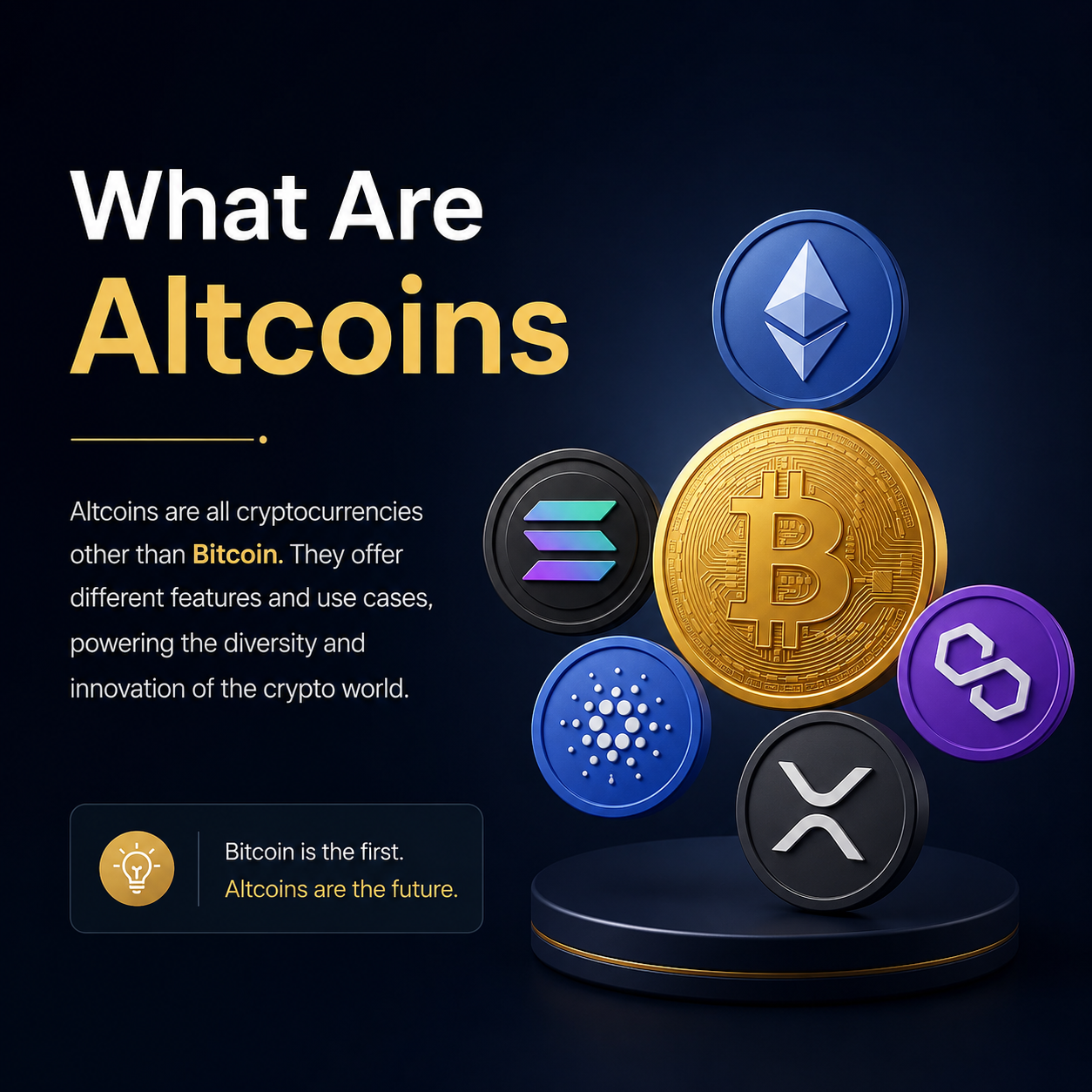
Let’s start simple. The word “altcoin” is short for “alternative coin.” Basically, every cryptocurrency that isn’t Bitcoin is called an altcoin. That’s the whole idea.
So when you ask what are altcoins, the answer is easy. They are all the other crypto coins out there. Ethereum, Solana, Cardano, Dogecoin, you name it. If it’s not Bitcoin, it’s an altcoin.
Right now, there are over 20,000 altcoins floating around. Some are worth billions of dollars. Others are worth less than a penny. Some are real projects with big teams. Others are jokes that somehow gained value (looking at you, Doge).
So yes, the altcoin universe is massive. Bitcoin started the party, but altcoins keep it interesting. Each one tries to solve a problem Bitcoin doesn’t. Or sometimes they just exist because someone thought it would be funny. Crypto is wild like that.
If you’re still wrapping your head around Bitcoin first, check out our Bitcoin vs Gold guide to see how the OG coin stacks up against traditional assets.
Why Do Altcoins Even Exist?
Good question. If Bitcoin already exists, why do we need thousands of other coins?
Here’s the deal. Bitcoin is awesome, but it doesn’t do everything. It’s slow. It’s not great for smart contracts. It’s just made to be money. So smart folks started building new coins to fix these issues.
Some altcoins want to be faster than Bitcoin. Some want to host apps and games. Some want to give you privacy. Some are made just for fun. Each altcoin has its own goal.
Think of Bitcoin as the printing press. It changed the world. But after the printing press, we got computers, phones, and the internet. Each new tech built on what came before. Altcoins do the same. They build on Bitcoin’s idea and take it in new directions.
So now you really get what are altcoins. They’re not just copycats. They’re attempts to push crypto forward in different ways.
The Main Types of Altcoins
Not all altcoins are the same. They come in different flavors. Let’s break down the main types so you know what are altcoins doing in each category.
Type 1: Smart Contract Platforms
These altcoins are like operating systems for crypto. People build apps, games, and tools on top of them.
Examples: Ethereum, Solana, Cardano, Avalanche, Polkadot
Ethereum is the king of this group. But the others are catching up. They each have their own strengths. Some are faster. Some are cheaper. Some are more secure.
If you want to dive deeper into smart contract platforms, our Ethereum beginner’s guide explains the most popular one in detail.
Type 2: Stablecoins
Stablecoins are altcoins designed to stay at a fixed price, usually $1. They don’t go up or down like other crypto.
Examples: USDT, USDC, DAI, FDUSD
Why are these useful? Because crypto markets swing hard. Stablecoins give you a safe place to park money during a storm. You can sell your wild coins for stablecoins and wait for things to calm down.
Type 3: Privacy Coins
These altcoins focus on keeping your transactions private. Bitcoin is public. Anyone can see what you do. Privacy coins fix this.
Examples: Monero, Zcash, Dash
These are useful if you value privacy. But many countries don’t like them because they can be used to hide illegal activity. So they’re often banned from big exchanges.
Type 4: Meme Coins
The fun (and risky) part of crypto. These altcoins are based on jokes, memes, or pop culture. Most have no real use case.
Examples: Dogecoin, Shiba Inu, Pepe, Bonk
Don’t laugh too quick. Some meme coins have made early holders millions. But many have also crashed to zero. It’s pure casino energy. Buy with money you can lose.
Type 5: Utility Tokens
These altcoins do a specific job inside an app or platform. You need them to use certain services.
Examples: BNB (for Binance), CRO (for Crypto.com), LINK (for Chainlink)
The value comes from real demand. As more people use the platform, the token’s price often goes up.
Type 6: Layer 2 Tokens
These altcoins help Layer 1 chains (like Ethereum) scale better. They handle transactions faster and cheaper.
Examples: Arbitrum, Optimism, Polygon, Starknet
If you’ve ever used Ethereum and complained about high fees, Layer 2 is the fix. These tokens are growing fast as more folks need cheaper crypto.
Type 7: DeFi Tokens
DeFi means “decentralized finance.” These altcoins run banking apps without banks. Lending, borrowing, trading, all done with code.
Examples: UNI (Uniswap), AAVE, MKR (MakerDAO), SUSHI
DeFi tokens give you a piece of these apps. As the apps grow, your tokens can become more valuable.
Type 8: Gaming and NFT Tokens
These altcoins power blockchain games and NFT platforms. You use them to buy items, level up, or trade digital art.
Examples: AXS (Axie Infinity), SAND (Sandbox), MANA (Decentraland), IMX (Immutable)
Web3 gaming is still early. But if it takes off, these tokens could go big.
Are Altcoins a Good Investment?
Now you understand what are altcoins. But should you actually buy them?
Here’s the honest answer. Altcoins are higher risk and higher reward than Bitcoin. Many altcoins go to zero. But a few make their early holders rich.
The numbers tell the story. About 90% of altcoins that existed in 2017 are dead now. Gone. Worthless. But the ones that survived (like Ethereum, Solana, BNB) gave thousands of percent gains.
So altcoins can change your life. Or they can hurt your wallet. It depends on which ones you pick and how you play.
If you want to read about how altcoins compare to Bitcoin, our Ethereum vs Bitcoin comparison breaks down the biggest altcoin against the OG in detail.
How to Spot Good Altcoins
Not all altcoins are worth your money. Here’s how to filter the good from the junk.
1. Check the Team
Who’s behind the coin? Are they real people with real names? Do they have past experience? Have they shipped real products before?
Anonymous teams aren’t always bad. But they raise more risk. Trusted teams have skin in the game.
2. Look at the Use Case
Does the altcoin solve a real problem? Or is it just a copy of something else?
The best altcoins fix something Bitcoin or Ethereum can’t. They have a clear job. A real reason to exist.
3. Study the Tokenomics
This is just a fancy word for “how the coin’s supply works.” Ask:
- How many coins exist?
- How many will ever exist?
- Who holds the most?
- When do new coins get released?
Bad tokenomics can sink a project even if the tech is great.
4. Check the Community
A strong community keeps a coin alive. Active Twitter, Discord, Telegram, and Reddit groups are good signs.
But watch out for hype only communities. Real builders talk about the tech. Pump only fans just want to flip and dump.
5. Look at the Charts
Past price action tells a story. Has the coin had healthy growth? Or has it been pumped and dumped many times?
Tools like Bitcoin’s Rainbow Chart work for spotting cycles. The same idea applies to altcoins, just with more noise.
Track Bitcoin’s Price Cycle Live
6. Check Real Adoption
Are people actually using the coin? Or is it just speculation?
Real users, real transactions, and real partnerships matter more than Twitter hype.
For more research data on tens of thousands of altcoins, check out CoinGecko. They track real time prices, market caps, and stats on almost every crypto out there.
The Risks of Altcoins You Must Know
Let’s keep it real. Altcoins are risky. Here’s what can go wrong.
Risk 1: Rug Pulls
Some altcoins are made just to steal money. The team pumps the price, then dumps all their coins. Investors are left holding worthless tokens.
Rug pulls happen all the time in crypto. Always research before you buy.
Risk 2: Slow Death
Most altcoins don’t crash hard. They just slowly fade away. The team stops working. The community moves on. The price drips lower and lower.
You think you’re holding a winner. But over years, it goes to zero.
Risk 3: Hacks
Many altcoin platforms have been hacked. Smart contract bugs can drain millions in seconds. Even big names have lost huge funds to hacks.
Risk 4: Regulation
Governments are still figuring out how to handle altcoins. New rules can crush a coin overnight. Especially in cases like privacy coins or unregistered tokens.
Risk 5: Wild Price Swings
Altcoins move way more than Bitcoin. A 30% drop in one day is normal. A 50% drop in a week happens. Your stomach needs to be strong.
Risk 6: Scams Everywhere
Crypto attracts bad actors. Fake exchanges, phishing sites, Discord scams, fake influencers. The list goes on. Stay sharp.
Altcoin Season: When Things Get Crazy
You’ll hear folks talk about “altseason.” This is when altcoins moon while Bitcoin sits still.
It usually happens in waves. After Bitcoin makes a big move, money flows into altcoins. Prices go up across the board. Some altcoins gain 1000% or more in weeks.
But altseason ends just as fast. Money flows back to Bitcoin. Or out of crypto entirely. Altcoins crash. Many never recover.
Smart traders try to catch the start of altseason and exit before the top. Easier said than done. Most folks buy at the peak and panic sell at the bottom.
How to Build a Smart Altcoin Portfolio
Want to play altcoins without losing your shirt? Here’s a simple framework.
Rule 1: Bitcoin First
Put at least 40% to 60% of your crypto in Bitcoin. It’s the safest base. Altcoins go up when Bitcoin goes up. So you need a strong base first.
Rule 2: Ethereum Second
Add 20% to 30% in Ethereum. It’s the biggest altcoin. Most other crypto runs on it. Solid second pick.
Rule 3: Pick 3 to 5 Solid Altcoins
Don’t buy 50 different coins. You can’t track that many. Pick 3 to 5 altcoins you really believe in. Spread your remaining 10% to 30% across them.
Rule 4: Skip the Junk
Avoid no name coins, random memes, and projects with no clear use. They might pump for a day. But most go to zero.
Rule 5: Take Profits
When an altcoin doubles or triples, take some money off the table. Convert back to Bitcoin or stablecoins. Don’t be greedy.
Rule 6: Set Stop Losses
Decide ahead of time at what price you’ll sell if things go wrong. Stick to it. Emotions kill profits.
For more tools and live market data to help you track your altcoin journey, visit our homepage anytime. We have everything you need.
Top Altcoin Categories to Watch in 2026 and Beyond
Want to know which altcoin sectors might pop next? Here are the hot themes.
AI Tokens: Coins that mix AI and blockchain. Big interest from investors. Examples: FET, AGIX, RNDR.
Real World Assets (RWA): Tokens that put real things (real estate, bonds) on blockchain. Could be huge. Examples: ONDO, POLYX.
Bitcoin Layer 2s: New chains that build on Bitcoin to add smart contracts. Examples: STX, RIF.
Modular Blockchains: Networks that split tasks for better speed. Examples: TIA, DYM.
Liquid Staking Tokens: Let you stake while still using your crypto. Examples: LDO, RPL.
These are themes. Not specific buy calls. Do your own research before putting money in any of these.
Watch Live Crypto Liquidity Flows
Common Myths About Altcoins
Let’s bust some myths about what are altcoins and how they work.
Myth 1: “All altcoins are scams.” Wrong. Many are. But many are real projects with real teams and real value. Don’t paint with a broad brush.
Myth 2: “Altcoins will always beat Bitcoin.” Not always. Bitcoin often outperforms altcoins during bear markets and even some bull markets. Bitcoin is the king for a reason.
Myth 3: “You need to buy every new altcoin.” Bad idea. Most new altcoins fail. Stick to ones with real history and use cases. New launches are mostly traps.
Myth 4: “Altcoins are easy money.” Pure fantasy. Most altcoin holders lose money. Only patient, smart investors make it big.
Myth 5: “If a coin has a low price, it’s cheap.” Wrong. A coin priced at $0.001 isn’t “cheap.” What matters is the market cap, not the price. A $50 coin with 21 million supply might be cheaper than a $0.001 coin with 1 trillion supply.
Wrapping It Up
So now you know exactly what are altcoins and why they matter. They’re all the cryptocurrencies that aren’t Bitcoin. From smart contract platforms to meme coins, the altcoin world is wild and full of options.
Some altcoins will change the world. Many will go to zero. Your job is to pick the right ones. Or just stick to Bitcoin and Ethereum if you want safer plays.
Whatever you choose, never bet more than you can afford to lose. Altcoins move fast. They can make you rich. They can wreck your wallet. Treat them with respect.
You now know more about altcoins than most folks out there. Use that edge wisely. Stay curious. Keep learning. The crypto world rewards those who do their homework.
Frequently Asked Questions
What are altcoins in simple words?
Altcoins are all cryptocurrencies that aren’t Bitcoin. The word comes from “alternative coin.” Examples include Ethereum, Solana, Dogecoin, and thousands of others. Each altcoin tries to solve a problem Bitcoin doesn’t or take crypto in a new direction.
Are altcoins better than Bitcoin?
Not always. Altcoins can grow faster than Bitcoin during bull markets. But they also crash harder during downturns. Bitcoin is safer. Altcoins are higher risk and higher reward. Most smart investors hold both.
Which altcoins are safest to buy?
The biggest and oldest altcoins tend to be safer. Ethereum, BNB, Solana, and Cardano have strong teams, big communities, and real use cases. Newer or smaller altcoins carry much more risk. Always do your own research before buying.
How many altcoins should I own?
For most folks, 3 to 5 altcoins is plenty. Owning too many is hard to track. You can’t follow news, prices, and updates for 30 different coins. Pick a few you really believe in and focus on those.
Can altcoins make me rich?
Maybe. Some altcoins have made early holders millions. But for every winner, thousands fail. Treat altcoins as a small part of your investments. Never bet money you can’t afford to lose. Patience and research matter more than luck.
Disclaimer
The content of this article is for informational purposes only. It is not financial, investment, or legal advice. Cryptocurrency prices are volatile and carry risk. Always do your own research and talk to a qualified expert before you make any investment choices. vCryptoCoin does not take responsibility for any losses that may occur from acting on the information in this article.